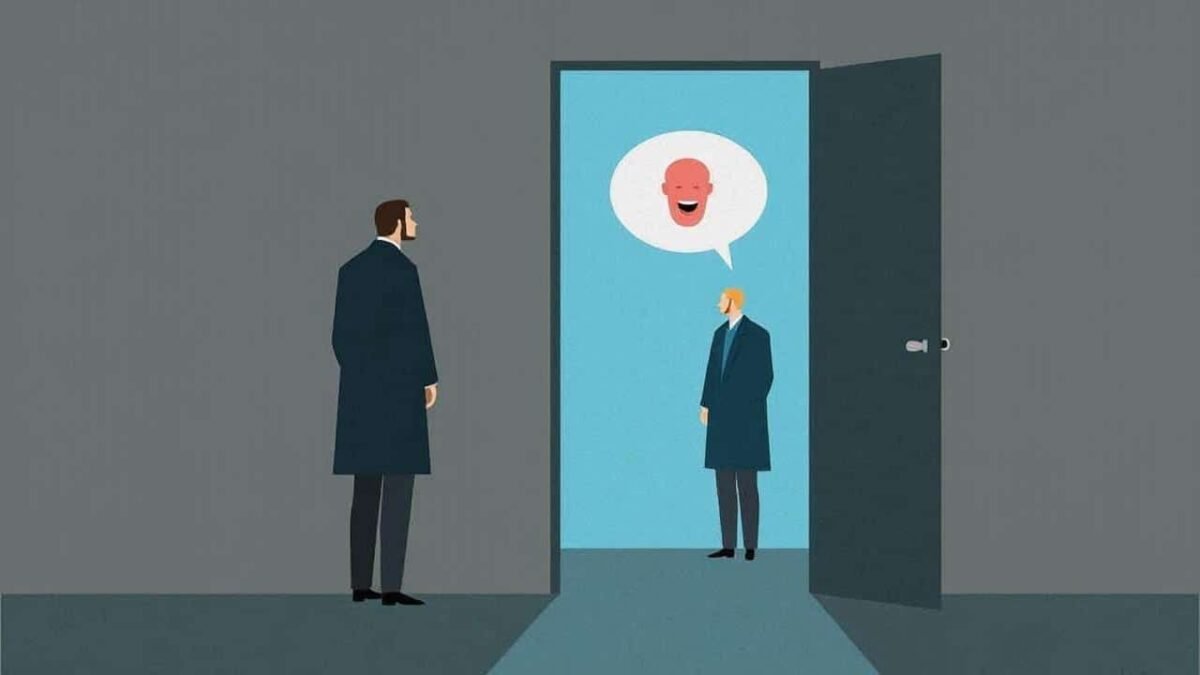
You close the front door, drop your keys, and the apartment falls into that heavy, movie-like silence. No notifications. No one waiting in the kitchen. Just the hum of the fridge and your own footsteps. “Right, what’s next?” you murmur, half to yourself, half to the room.
Ten minutes later, you’re talking full sentences. Negotiating with your to‑do list out loud. Rehearsing what you *should* have said in that meeting. Maybe even answering yourself in a different tone. Then the tiny doubt shows up: “Is this… weird? Am I losing it?” Your voice suddenly sounds louder, almost suspicious, between those four walls. You grab your phone, tempted to Google “talking to myself crazy sign,” but something in you hesitates. Because, deep down, it doesn’t feel like madness. It feels strangely sharp.
Why talking to yourself can be a mark of a powerful mind
Watch someone truly focused when they think no one’s looking. Athletes mutter before a crucial serve. Programmers whisper lines of logic. Parents in the car narrate the day ahead at the traffic lights. Self-talk shows up like background noise, yet it’s often where the real mental work happens. When you’re alone, that voice gets room to breathe. Your thoughts stop being a messy cloud and start becoming sentences. And once they have words, they have shape. That’s where the hidden edge lies.
Researchers call it “externalized self-regulation.” In plain English: you’re using language to steer your own brain. Kids do it loudly when they play: “Now the dragon goes here, now I build this.” As adults, we lower the volume, but the mechanism stays. The more complex your inner world, the more your mind leans on this tool. One classic example: a study from the University of Wisconsin asked people to find objects in a messy image. Half were told to say the object’s name out loud while searching: “banana, banana, banana.” Those who used self-talk spotted it faster and more accurately. Not magic. Just language sharpening perception.
How elite performers use internal dialogue
Elite performers use this trick constantly. Tennis legend Serena Williams has been caught many times on camera talking to herself between points. Short, punchy phrases. Not for show. For focus. High-level chess players whisper variations. Actors rehearse their lines alone, out loud, again and again. They’re not waiting for someone else to guide them. They’re building their own internal coach. Neuroscience gives a neat explanation. Speaking activates more brain regions than silent thinking: motor areas, auditory zones, parts of the frontal cortex. By involving your voice and your ears, you’re giving your thoughts a second channel to travel through. Like sending the same message over two networks instead of one. For complex problems, that double route can make your thinking more precise, more original, more resilient.
How to talk to yourself in a way that actually boosts your abilities
Start simple: narrate, don’t judge. When you’re alone, try describing what you’re doing in real time, like a quiet sports commentator. “I’m opening the email. I feel tense about this. I’ll answer just the first question now.” This tiny shift pulls your brain out of autopilot and into conscious control. Then play with *second person* self-talk. Instead of “I’ll get through this,” say “You’ll get through this.” Research from the University of Michigan shows that people who talk to themselves as “you” stay calmer under stress and make clearer decisions. It’s like borrowing the voice you’d use for a friend, and turning it toward yourself.
The trap is using your out-loud voice only to attack yourself. “Idiot. Why did you do that?” sounds trivial when whispered in a kitchen, but your nervous system hears it as a real threat. Over days and weeks, that background soundtrack erodes confidence and creativity. You don’t need fake positivity. You need accurate, fair language. Try phrases like: “That was a mistake, not a disaster.” Or: “You’re tired, not useless. Take a break, then try again.” Small corrections, spoken out loud, can rewrite years of silent self-sabotage. On a bad day, that might be your most underrated superpower. One psychologist calls healthy self-talk “a portable therapist with terrible Wi‑Fi, but always on.” It’s clumsy, sometimes repetitive, yet incredibly loyal. If your voice sounds harsh today, notice it. Name it. Then, slowly, change its tone. “The way you talk to yourself when no one is listening quietly trains the person you become in public.”
- Turn recurring worries into questions: “What exactly am I afraid will happen?”
- Use your out-loud voice to plan the next micro-step, not the whole life strategy.
- Keep self-talk concrete in stressful moments: “Breathe. Stand up. Drink water.”
- Claim your abilities: say, literally, “You’re good at learning hard things.”
- Pause if your voice becomes cruel. Restart like you would with a friend.
When your private voice becomes your hidden advantage
We’ve all had that moment where we catch ourselves talking alone in the bathroom mirror and instantly go quiet, embarrassed. The reflex is to hide it, to scroll instead, to drown that voice in someone else’s content. Yet the people who do remarkable work often protect this private space fiercely. They use self-talk to rehearse the speech long before the stage. To debug an idea when there’s no mentor around. To hold themselves together in the middle of a silent kitchen at 1 a.m., staring at a laptop that won’t cooperate. Their out-loud voice becomes a rope they can hold when everything else feels foggy.
There’s a cultural myth that genius is purely silent, brooding, locked in its own head. Reality looks messier and more human: half-finished sentences muttered while pacing, whispered reminders, quiet pep talks over a sink full of plates. Soyons honnêtes : personne ne fait vraiment ça tous les jours avec une discipline parfaite. But the ones who give their private voice the right to exist – and to be kind, clear, and curious – stack invisible advantages over time. You don’t need to “fix” the fact that you talk to yourself when you’re alone. You might simply need to tune it. Shift it from background noise to a subtle instrument. Let it question you. Let it comfort you. Let it challenge you without tearing you down. That’s often where exceptional abilities quietly begin to organize themselves.
Is talking to yourself a sign of mental illness?
Does self-talk make you smarter?
Should I be worried if I answer myself?
Is it better to think silently than talk out loud?
How can I make my self-talk more positive without lying to myself?