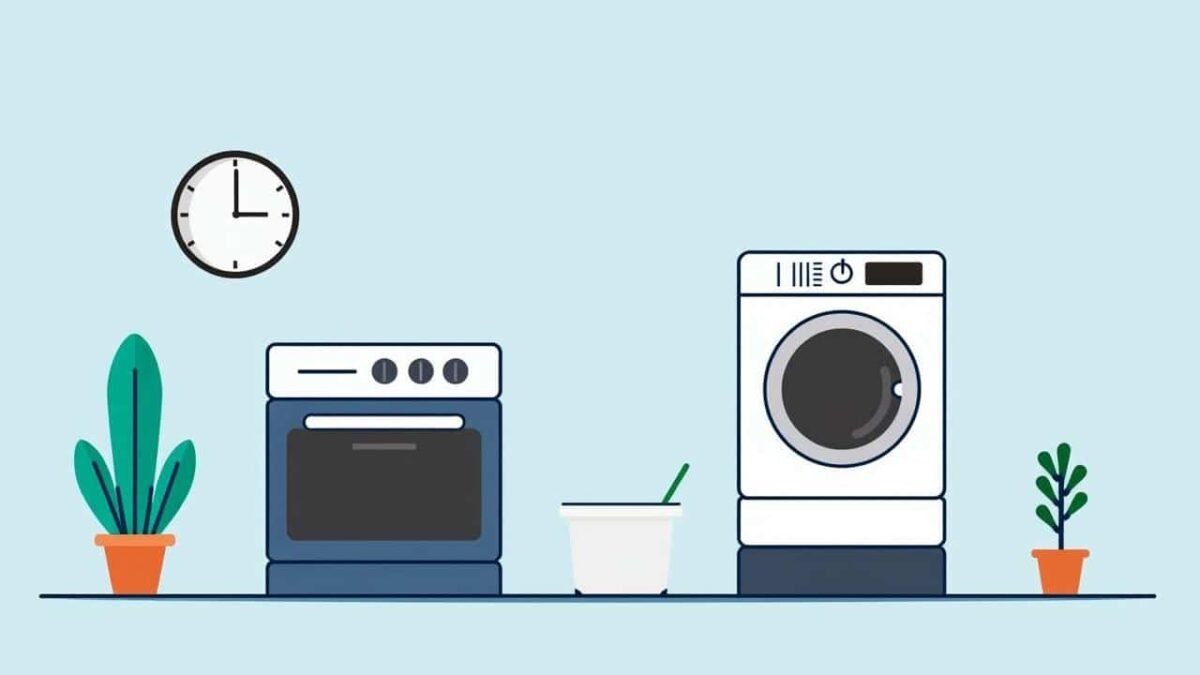
The washing machine hummed in the corner as the streetlights blinked on.
Outside, people were heading home, scrolling their phones, thinking about dinner. Inside, Emma stabbed at the oven controls with tired fingers, the dishwasher already loaded and ready to roar. It was 7:02 pm. Peak time on the energy grid. Peak time on her electricity bill.
She didn’t know that the exact moment she pressed “Start”, the cost of running that load jumped. Not by a few pennies, but by enough to quietly snowball over months. The fridge clicked on. The tumble dryer whirred to life. A perfect storm of everyday habits spilling money into the air.
Later, as she checked her banking app and sighed at the rising direct debit for “utilities”, the real leak in her budget wasn’t obvious. It was hiding in the clock.
Why the time of day changes the price of your electricity
Most people think an appliance costs the same to run, no matter when you switch it on. Same machine, same power, same price. The reality is very different in many homes today. Especially if you’re on a time-of-use tariff or a plan with peak and off-peak hours.
Energy companies don’t all shout about it in big bold letters, but they quietly change their prices hour by hour. When demand is high – early evening, breakfast rush – the price can spike. When half the city is asleep, it can drop dramatically. Same washing cycle. Very different bill.
That gap is where a lot of families are throwing money away without realising it.
In the UK, for example, some off-peak night rates are less than half the daytime price. In parts of the US, “peak” hours can be almost twice as expensive as late-night or midday slots. It sounds abstract on paper. In real life, it’s pure habit.
Take the classic Sunday laundry marathon. One family in Manchester ran two washing loads, one tumble dryer cycle and the dishwasher every Sunday between 6 pm and 9 pm. When they finally checked their tariff details, they realised those same cycles after 10 pm would have cost about 40% less.
Over a year, that “oh well, it’s just Sunday stuff” routine added up to more than £120 in wasted potential savings. No new appliances. No smart home gear. Just blindly using energy at the most expensive moment on the clock.
The logic behind it is simple. When everyone cooks, washes, charges devices and uses heating at the same time, the grid strains. Power companies pay more to meet demand, so they charge more. During quiet hours, they need people to use some of that capacity, so the price drops.
➡️ A polar vortex anomaly is approaching, and the atmospheric patterns driving it have not been observed at this scale during a typical January
➡️ A bay leaf under the pillow: The small night routine I once mocked – until it changed my sleep
➡️ 6 habits of grandparents deeply loved by their grandchildren, according to psychology
➡️ Meteorologists alert that an unusually early Arctic collapse is forming in January, with atmospheric signals not seen in decades
➡️ After 250 years, a lost explorer’s ship has been found perfectly preserved off Australia’s coast : a time capsule from another era
➡️ Astronomers release stunning new images of interstellar comet 3I ATLAS captured across multiple observatories
➡️ How to keep mice seeking shelter out of your home: the smell they hate that makes them run away
➡️ Boiling lemon peel, cinnamon and ginger, how people recommend it and what it’s actually for
If you always run your big appliances at “social” hours, you’re effectively paying a premium for convenience you don’t always need. That 30-minute dryer cycle at 7 pm might cost the same energy in kilowatt-hours. It just travels through a more expensive window of time.
Once you see the day as a price map, your home looks different. The oven is not just an oven. It’s a clock decision.
Small timing shifts that cut your bill without changing your life
The easiest savings don’t come from cold showers or candlelit evenings. They come from sliding a few everyday actions slightly along the timeline. Think of it as living roughly the same day… just nudged.
Start with the obvious “heavy hitters”: washing machine, tumble dryer, dishwasher, electric vehicle charger, electric heaters and immersion water heaters. These are the appliances that gulp electricity, not sip it. Running them during cheap hours can slice a real chunk off your monthly bill.
A simple tactic: load the dishwasher after dinner as usual, but set a delay start for midnight or your off-peak period. Same for the washing machine. You still live your evening, you just let the machines work while you sleep.
Most modern washing machines and dishwashers already have a timer or delay start button hiding in plain sight. Many people ignore it the way they ignore the “settings” tab on their phone. That little button is often worth more than the fancy eco sticker on the door.
If you get home at 6 pm, it’s tempting to throw everything on straight away. We’re creatures of habit, and routine feels safe. On a flat-rate tariff, it matters less. On a time-of-use plan, it’s like choosing the most expensive parking space every single day.
Try this shift for a week: instead of running the dryer or dishwasher between 6 pm and 9 pm, set them to run after you go to bed or early in the morning. Track your smart meter or online account if you can. Many readers are surprised to see the “spike” in their evening usage flatten out.
There’s also a psychological angle. When you know your cheap window is, say, 11 pm to 7 am, you naturally start planning around it. Batch washing. Bigger loads. Less random half-empty cycles. Suddenly you’re not only paying less per unit, you’re also using fewer units.
“The moment people connect their routines with the clock and the tariff, you can almost hear the click in their head,” says an energy adviser who works with low-income households. “They don’t feel powerless anymore. They feel like they’ve found a hidden lever.”
This is where small rituals help. You could stick a simple note on the fridge:
- Check today’s peak hours
- Delay dishwasher to off-peak
- Run one big laundry load, not two small ones
On a tired Tuesday night, that scrap of paper does the thinking for you. *Because let’s be real: no one opens their energy app with a glass of wine and thinks, “What a fun way to spend my evening.”*
Rethinking your daily rhythm with the energy clock in mind
Once you’ve played with timing for a few days, it tends to change the way you see your home. Lights that burn all evening for no reason feel louder. That second tumble-dry of the same load feels a bit like throwing coins into the drum.
You might start doing quiet “audit moments”: when the house is buzzing, you pause and listen. Oven. TV. Clothes dryer. Kettle. Phone chargers. It’s like hearing your bank account whisper under all that noise.
On a deeper level, timing your appliances can turn from a money trick into a shared family game. One teenager in a London flat turned off the wall anything that glowed blue when not in use. After a month, his parents noticed the difference in their smart meter and gave him a cut of the savings as pocket money.
For some, the emotional trigger isn’t just the bill. It’s the feeling of waste. Of paying extra when a simple clock shift would do. On a planet where energy stories are dominated by crisis and scarcity, quietly regaining control at home feels oddly comforting.
Not everyone can run a dishwasher at midnight, and not every landlord offers a clever tariff. Some people work nights. Some share walls with light sleepers who won’t love the 2 am spin cycle. Life is messy. Schedules are real.
Still, even in cramped flats or busy family houses, there’s usually at least one appliance that can migrate to a cheaper slot without drama. Maybe it’s the weekend laundry. Or the electric water heater boost. Or that daily habit of running a nearly-empty dishwasher “just to clear the sink”.
The quiet revolution isn’t about chasing perfection. It’s about shifting from “I have no idea why my bill is so high” to “I know exactly which hours are killing me.” That clarity alone is worth something. Money follows clarity.
Energy companies are unlikely to send you a friendly letter saying, “Hey, you’re using everything at the worst possible time, here’s how to pay us less.” That job falls to you, to your curiosity, to those tiny experiments with the timer button.
We’ve all had that moment where the bill lands and you feel a small punch in the stomach. The next time that happens, instead of just swearing at the envelope or the email, look at the clock in your kitchen. The answer might be hiding right there, between 6 pm and bedtime.
How do I know if I’m on a time-of-use or peak/off-peak tariff?
Is it really safe to run appliances like washing machines at night?
Which appliances benefit most from off-peak hours?
What if my schedule doesn’t fit the cheap hours?
Are smart plugs and smart timers worth it?