The first tear falls just as you try to slice straighter.
Your knife slips, your nose tingles, and within seconds you’re blinking through a blurry, stinging haze. The cutting board is damp, but not only from the onion juice. You curse the recipe that asked for “one large onion, finely chopped” as if that was the easiest thing in the world. You wonder if there is a better way to handle this vegetable without sacrificing your dignity.
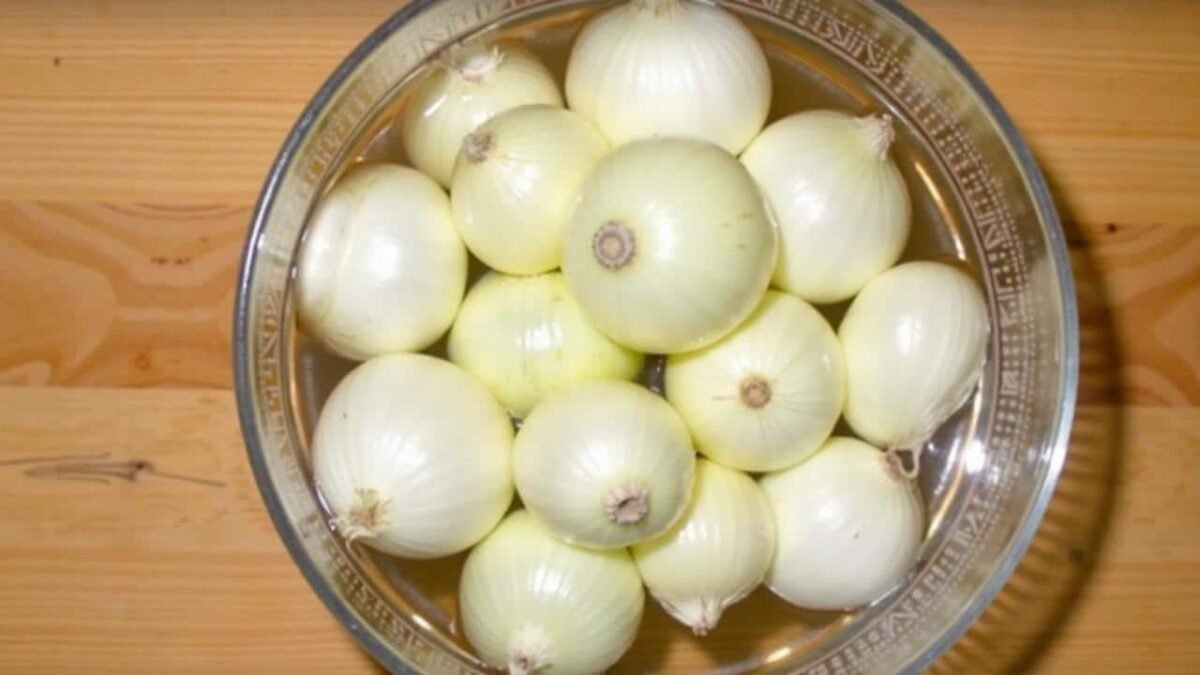
Then you notice something oddly calm at the other end of the counter. A bowl of water. Inside, a handful of sliced onions, quietly soaking like they’re on a spa day. No drama. No tears. Just a quiet transformation happening in plain sight.
Ten minutes later, you taste one of those slices. And the kitchen doesn’t feel quite the same anymore. It is a revelation that turns a dreaded chore into a moment of pure culinary clarity.
Why a simple bowl of cold water changes your onions
Onions are like that loud friend everyone loves at a party… until they get too loud. Raw, they can be sharp, aggressive, almost rude on the tongue. A salad, a burger, a taco: all it takes is one harsh bite and the balance is gone. You might pick around them, ruining the intended texture of the dish.
Drop those same slices into a bowl of icy water for 10 minutes, though, and they change personality. The bite softens. The flavor gets rounder, almost sweet. You still know you’re eating onion, but it’s no longer picking a fight with every other ingredient on the plate. It becomes a team player rather than the loudest voice in the room.
The magic isn’t dramatic to the eye. The rings look the same. They even feel similar under your fingers. The difference only appears when you taste. It’s like someone quietly turned down the volume and suddenly, everything else in the dish can finally be heard. This is the essence of flavor balance.
Picture a family dinner where tacos are on the table. The kids are loading tortillas, the adults are fighting over the last spoon of guacamole. There’s a small bowl of finely chopped raw onion in the middle, looking innocent. It sits there, promising flavor but delivering a punch that some can’t handle.
One kid tries it, makes a face, and pushes the whole taco away. Too strong. Too spicy. Too “oniony”. That same night, another version of you decides to try soaking those onions in cold water first. Same onion, same cutting board, same recipe. Just 10 minutes in the bowl while you grate cheese and warm tortillas. You prep everything else, and by the time the food hits the table, the onions have done their magic.
This time, the kid eats the taco and goes back for more. The raw onion is still there, but it doesn’t overwhelm. It lifts the lime, plays nicely with the cilantro, lets the meat speak. Same dish. Different experience. All because of a short cold bath.
The science behind the sting
Under the surface, there’s a simple bit of kitchen science going on. When you slice an onion, you break its cells and release sulfur compounds. Those are what sting your eyes and punch your taste buds. Specifically, the compound known as syn-propanethial-S-oxide is released into the air, causing that burning sensation.
Some of those compounds are water-soluble, which means they’re drawn out into the cold water. As the slices soak, that harsh edge mellows. The cold temperature also tightens the onion’s texture, so it stays crisp. You end up with rings that are less aggressive but still fresh and snappy.
*It’s a little like rinsing away the shout while keeping the voice.* The water acts as a neutralizer, diluting the potency of the sulfuric acid enzymes that make you weep and wince. It’s a chemical exchange that benefits the cook and the eater alike.
This is why soaked onions work so well in dishes where they’re eaten raw: salads, ceviche, sandwiches, burgers, salsas. The flavor becomes more polite, more layered. Suddenly, the onion isn’t the bully on the plate. It’s the backing singer that makes the whole song better. It respects the other ingredients while still asserting its presence.
How to soak onions the right way (without overdoing it)
The method is embarrassingly simple. Slice or chop your onion as usual, then slide the pieces into a bowl of very cold water. If your tap water isn’t really cold, throw in a few ice cubes. You want that quick chill. The colder the water, the faster the reaction and the crisper the final result.
Set a timer for 10 minutes. Not half an hour, not “whenever I remember”. Around that mark is where the texture and flavor hit a sweet spot. The onion stays crunchy, but the wild, stinging bite backs off nicely. This is the crucial 10-minute rule.
When time’s up, drain the onion well. Give it a quick shake in a sieve, or pat it gently with a clean towel. You don’t want puddles of water diluting your salad dressing or sauce. What you keep on the plate should be onion, not onion-flavored water. Moisture is the enemy of a crisp salad.
There are a few traps people fall into here. Some leave the onion soaking too long and wonder why it tastes like nothing. An hour in water can strip so much character that it turns bland, especially with mild varieties like sweet onions. The water-soluble compounds include flavor, not just the bad stuff. Don’t overdo the spa day.
Others forget the cold part and just dump slices into lukewarm water from the tap. The result is a softer, sadder onion that’s lost its crunch. The chill isn’t just about flavor; it’s about that satisfying bite when your teeth hit the ring. Warm water makes them flaccid and lifeless.
And then there are those who skip this step completely and live with burning eyes and angry salads. Soyons honnêtes : personne ne fait vraiment ça tous les jours. But for raw onion moments that matter—a big dinner, a barbecue, the sandwich you’ve been dreaming about all morning—this tiny effort pays off fast. It turns a barrier into an asset.
A chef I once watched in a tiny London kitchen summed it up perfectly between orders:
“Onions are like guests,” he said. “If they arrive too strong, you don’t kick them out. You just ask them to cool down a bit.”
That’s what the cold water soak does. It doesn’t erase the onion’s personality, it just takes the edge off so everything else has room to shine. On a burger, the soaked rings don’t fight the cheese. In a Greek salad, they don’t suffocate the feta. They’re present, but not pushy. It is the ultimate exercise in kitchen diplomacy.
For quick reference, keep this little checklist in mind:
- Use cold or iced water, not warm
- Soak for about 10 minutes, not much more
- Drain well before adding to your dish
- Try it first with raw uses: salads, tacos, burgers, salsas
Once you’ve felt the difference even once, it’s hard to go back to the burn.
Beyond tears: what this tiny habit changes in your cooking
On a surface level, soaking onions in cold water feels like a hack to stop crying and tame the burn. But the ripple effect is bigger. Suddenly, dishes you thought you “didn’t like because of the onion” start tasting balanced. Kids who used to pick out the white bits might stop. That colleague who always said your salsa was “too strong” takes a second spoon.
This small adjustment shifts how you season. When the onion isn’t shouting, you notice the citrus more. The herbs feel brighter. The olive oil or butter seems fuller. You’re not just making the onion nicer—you’re making the whole dish clearer. It’s like someone cleaned your kitchen’s sound system. The acoustics of flavor improve instantly.
On a deeper level, it changes how you think about control in cooking. You’re no longer at the mercy of a raw ingredient’s mood. You have a lever you can pull in 10 minutes, with just water and a bowl. And once you see that, you start noticing all the other little levers you’ve been ignoring. It empowers you to take charge of every bite.
The next time you reach for an onion, you’ll pause. You’ll picture that bowl of icy water, the way those slices seem to relax in it, the way your own shoulders drop a little when you taste the gentler crunch.
Maybe you’re making a quick lunch salad between two Zoom calls. Maybe it’s late, you’re tired, and you’re throwing together a sandwich with whatever’s left in the fridge. Maybe you’re cooking for someone who always says raw onion is “too much”.
On a busy day, you might skip the soak and hack your way through the onion like always. On another day, you’ll give yourself 10 minutes. The kitchen will stay quieter. The plate will taste cleaner. And you’ll feel, almost secretly, like you’ve just upgraded your everyday cooking without buying a single new tool. It is a minimalist change with maximalist results.
Point clé
Détail
Intérêt pour le lecteur
Cold water soak
Onion slices rest 10 minutes in icy water
Reduces harshness while keeping crunch
Flavor control
Mellows sulfur compounds without erasing taste
Makes salads, tacos and burgers more balanced
Simple routine
Uses only a bowl, water and a timer
Easy upgrade to everyday cooking with zero cost
Does soaking onions in cold water really reduce tears?
Will my onions lose all their flavor if I soak them?
Should I salt the water when soaking onions?
Is this trick useful for cooked dishes too?
Which onion varieties benefit most from soaking?