Cars slowed down.
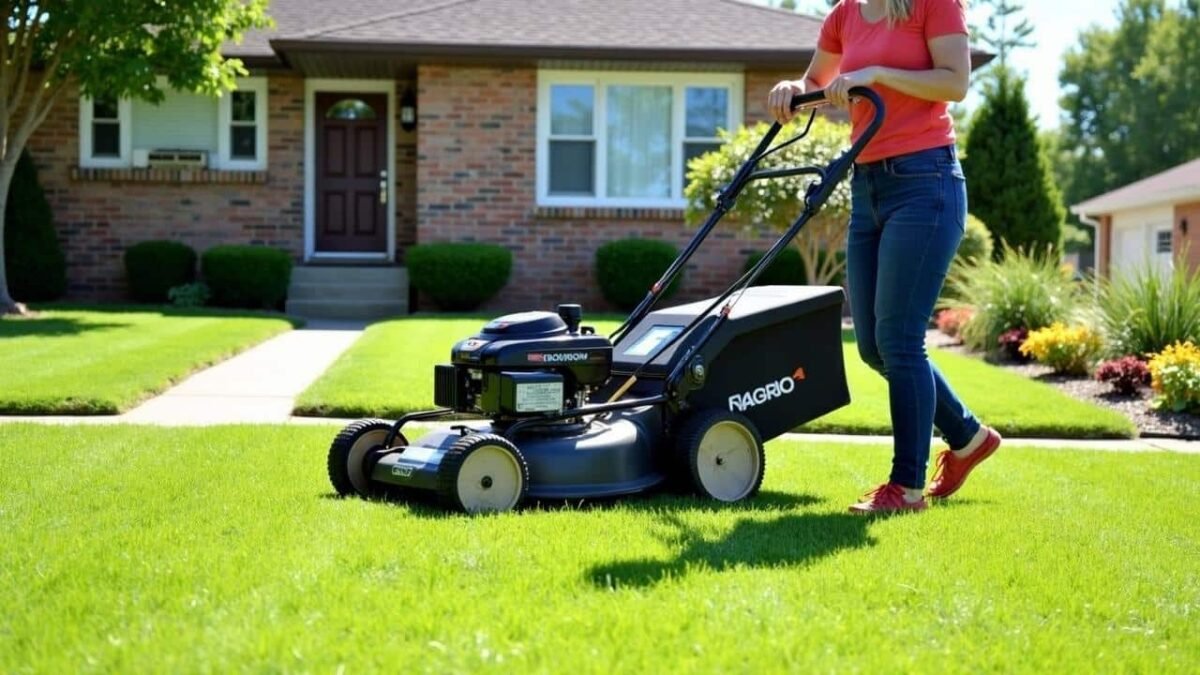
The mower stopped on a sharp mid‑day sunbeam.
John, a 43‑year‑old electrician, pulled off his headphones and squinted at the yellow notice pinned to his mailbox: from January 15, mowing your lawn between noon and 4 p.m. is banned. Not recommended. Banned.
He glanced at his watch. 12:07.
Next door, his neighbour froze mid‑stride, one foot on the mower, the other on the patio. The whole street suddenly felt guilty, as if everyone had been caught doing something vaguely indecent with their grass.
People read the same notice, lips moving on the words “between noon and 4 p.m.”. A dog barked at the mower, as if sensing that something in the summer routine had just snapped.
On WhatsApp, the first messages pinged in local groups. “Is this a joke?” “How are we supposed to do it after work?”
The real storm wasn’t in the sky. It was starting in people’s heads.
Midday mowers, meet the new rule
From January 15, your midday mowing habit becomes… illegal between noon and 4 p.m.
The rule targets that precise window when the sun is highest, the air driest, and the neighbourhood loudest.
Behind the dry legal line, there’s a very concrete reality. For many, that slot is the only time they have a mower in hand. Lunch break, quick cut, back to emails. Now, that little slice of control over a messy week disappears.
For parents, shift workers, and weekend warriors, the rule sounds less like environmental policy and more like a logistical puzzle.
An everyday gesture suddenly needs a timetable.
On a small cul‑de‑sac, the impact is almost comic. Picture a Saturday in late spring: six or seven gardens, all with that same slightly too‑long grass. The kind that bends under your foot and whispers “you’ve left me too long, mate”.
Until now, mowers fired up one by one, whenever people found a gap in their day. The retired couple at 11 a.m., the young family at 1:30 p.m., the night‑shift nurse at 3:45 p.m. Everyone negotiated with the noise in their own way.
With the ban in place, that window slams shut.
You now have two legal mowing slots: morning, or late afternoon. Which means the 6 p.m. mower rush may soon become a thing. Whole streets starting their Briggs & Stratton chorus just when kids are doing homework and people are finally slumping on the sofa.
Behind this rule lies a mix of reasons that sound both rational and slightly abstract when you’re just looking at your scruffy lawn. Local officials talk about heatwaves, noise pollution and protecting biodiversity.
From a climate and health angle, the logic is clear. Midday summer hours are now listed as “at‑risk” in many regions. Grass and soil are parched, air quality drops, and mower emissions hit when lungs are already struggling.
Then there’s the wildlife argument.
Pollinators and small animals seek shelter during the hottest hours. Slashing through dry grass at mid‑day is like bulldozing their last refuge. The law tries to carve out a small safe zone. On paper it makes sense. In real life, it collides with work schedules, habits, and that quiet pride we all feel when the lawn finally looks clean and lined.
How to rethink your mowing life without losing your mind
There is a way to live with the ban without turning every weekend into a tactical operation. The first key move: shift from “when I can” to “when the grass needs it, outside the forbidden slot”.
That sounds obvious on paper, but lawns don’t grow by calendar.
Start by watching your grass height instead of the date. Most recommend cutting when blades reach about 7–8 cm and trimming back to around 5 cm. Slightly longer grass handles heat better and needs less frequent mowing.
So rather than religiously mowing every Saturday at 1 p.m., you might discover that in cooler weeks, your lawn happily waits until Tuesday evening. In hot spells, you’ll mow less often, and at cooler hours. It feels like you’re giving up control, while in fact you’re working with the grass, not against it.
The second practical shift is about timing your day. Morning slots often feel impossible in theory and surprisingly manageable in practice. Mow between 8 and 10 a.m., the air is fresher, the sun kinder, and the neighbours less tense.
Late‑afternoon mowing, after 5 p.m., is the other option. Not ideal when you’re drained from work, but more realistic than it sounds if you spread tasks out: one small zone per evening instead of “all the garden in one brutal session”.
People with children often turn mowing into a mini‑ritual: early start on Saturday, quick cut, then breakfast on the terrace with the smell of fresh grass. It’s not romantic every week. Still, that little routine softens the blow of a rule that otherwise feels imposed from above.
There’s also the emotional and social side of the ban. It doesn’t just touch your schedule, it touches identity. A neat lawn is still loaded with meaning: respectability, care, sometimes even a quiet “I’m coping” on days when everything else is messy.
When that ritual is suddenly constrained, reactions can be sharp. Anger, irony, resignation. Online groups are already full of “garden rebels” planning to ignore the rule, and others quietly confessing they’re relieved: they finally have an excuse to let the lawn breathe a bit.
As one local gardener told me:
“People think they mow for the neighbours. Most of the time, they mow for themselves, to feel they have one tidy rectangle in a life that’s falling apart in the corners.”
*That sentence hits harder when you look at a patch of clover buzzing with bees.*
If you’re reading this with a knot in your stomach, you’re not alone. On a human level, this rule forces a renegotiation between control and letting go.
- Accept a bit of “imperfect” lawn: a few daisies and clover patches are not failure, they’re micro‑habitats.
- Talk with neighbours about mowing hours before tensions rise. A simple chat can prevent months of silent resentment.
- Test one new habit, not ten: earlier start time, or one extra day between mows, and see how it feels.
What this tiny ban really says about where we’re heading
The noon‑to‑4 p.m. mowing ban looks like a small detail of local life. Grass, noise, sun. Yet once it lands in a real street, with real people juggling work, kids, and bills, it reveals a bigger story.
We’re entering a time where everyday rituals we never questioned are being redrawn by climate, health and community rules. Driving into city centres, watering gardens, lighting wood burners, mowing at lunchtime. All these simple gestures are quietly moving from “private choice” to “shared negotiation”.
One day you wake up and discover that your mower is part of a public conversation on heatwaves and biodiversity. It feels strange, almost intrusive. On a deeper level, it forces us to ask: how much of our routine are we ready to bend for the common good, and where do we draw the line?
Some will react with resistance, others with creativity. A few will invest in quieter electric mowers or robotic models that work at dawn. Some will let part of the garden go wild and realise that a buzzing corner full of insects gives more joy than a perfect green carpet.
On a hot July afternoon, the rule will still be there. No mower noise, just the hum of distant traffic and maybe the insistence of a single cicada. That empty sound window will feel strange, almost too quiet.
What we choose to do with that silence — rest, rethink, or just scroll on our phones while staring at a slightly too‑long lawn — will say a lot about the kind of neighbours we’re becoming.
Does this ban really apply to private gardens?
What happens if I mow between noon and 4 p.m. anyway?
Do electric or robotic mowers get an exception?
Can I still use other garden tools at midday?
Is this a temporary measure for summer only?