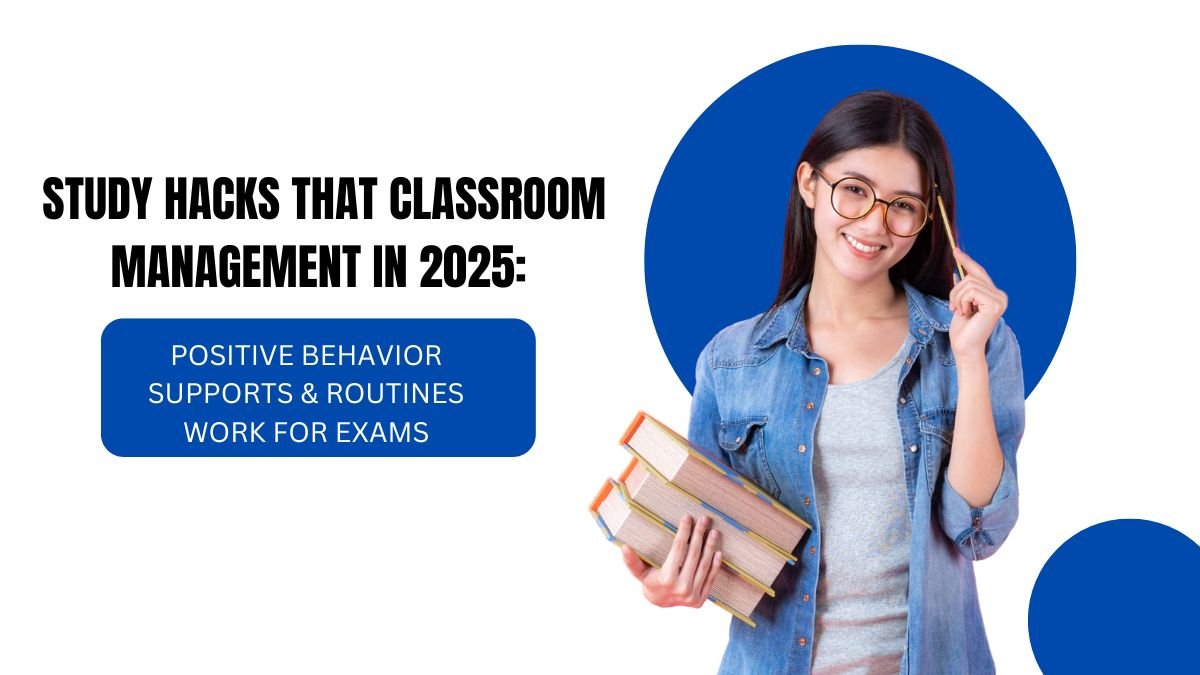
Classroom Management in 2025: Constructing Positive and Reasonably Predictable Learning Environments
Teaching has never only been about delivering a lesson. In 2025, an effective teacher is concerned with classroom management in a way that would discourage problems before they set in. Nowadays, instead of using discipline following misbehavior, educators resort to proactive efforts, wherein teachers set routines, reinforce positive behavior, and build supportive relationships with their students.
The transition is simple—and powerful: classrooms are no longer just arenas where rules are imposed from above. They are communities in which students and teachers partner together to create a pathway of learning that is smooth, fair, and fun.
What Is Different About Classroom Management in 2025?
Teaching in the classrooms today is even more dynamic due to the learning needs students bring, exposure to technology, and different backgrounds. With such diversity, fear and punishment do not work in managing students’ behavior. Instead, teachers are building structures to instill responsibility and respect from ground zero.
The core focus in classroom management states:
- Prevention not reaction
- Collaboration not control
- Support not punishment
This outlook allows classrooms to run predictably but with flexibility and student-centeredness.
Core Aspects of Effectual Management
Students as the Co-Creators
Students don’t just follow rules; they help make them. When learners sit with their teacher to discuss what respect looks like or how they want to treat each other, they take ownership of their behavior.
For example, the teacher may say, “No shouting.” Instead, the class would say together, “We will wait for our turn to speak so that everyone is heard.” That tiny change takes the energy away from compliance and turns it towards commitment.
Predictable Routines
Structure takes away stress, both for students and teachers. Students know exactly what to do when entering the classroom, changing from one subject to the next, or asking questions.
The 2025 teacher doesn’t just say this once; he or she picks it up with the students and models it over and over again until it is second nature. This eliminates save time and removes stopping learning for noninstructional purposes.
Reinforcing the Positive
Time and again, the research shows that when good behavior is recognized more than bad, behavior improves. Teachers aim to make statements praising positive behavior five times for every one correction given. This changes the whole environment of the classroom to one of encouragement.
Reinforcement can be as simple as:
- A smile or nod.
- Saying, “I appreciate how quietly you moved to your groups.”
- Giving points or tokens for consistent effort.
These little but frequent and substantive acknowledgments will motivate students to continue making the right choices.
Making The Right Environment
The physical configuration of a classroom very much determines behavior. Flexible seating; easily accessible materials; and strategically located resources will all lend themselves to facilitating lessons more effectively.
Students who struggle to focus might be seated near the teacher, and tables for group work can foster collaboration. A clean and welcoming classroom sets the tone for respect and order.
Fairness and Consistent Consequences
Mistakes do happen, even in proactive classrooms. What is important is how the teacher intervenes. If consequences are perceived as predictable, fair, and unwaveringly applicable to all, students will accept them more willingly.
Consequences are not intended to humiliate anyone but to steer. What comes naturally, maybe a calm reminder, could also be a little timeout or a more reflective talk as opposed to harsh forms of punishment such as detention.
Making Data Work to Understand Behavior
Teachers are increasingly relying on simple data-tracking to ascertain patterns of special student behaviors. Thus, no more is a child labeled “disruptive”; the data could reveal that indeed disruptions occur mainly in the afternoon when the child is tired or during unstructured group work.
In identifying triggers, teachers can modify routines, offer assistance, and/or alter strategy to stave off recurring challenges. This makes classroom management all the more individualized and heartening.
Strategies That Work in Daily Practice
- Teaching Procedures Like Lessons: Teachers never assume students know how to behave. They break down routines—like lining up or collecting materials—and practice them just like maths or reading.
- Silent Signals: Instead of stopping a lesson to correct a student, teachers use gestures, eye contact, or proximity to redirect without disruption.
- Relationship-Building: A history of daily greetings, interest in students’ lives, and restorative conversations when conflict happens are all key to building trust. Trusted teachers simply have fewer discipline problems.
- Constructive Feedback: Rather than vague praise, the feedback uses specific evidence: “I liked how you shared your notebook without being asked—that shows teamwork.”
- Restorative Approaches: When conflicts arise, focus is put on repairing the harm. Students are guided through talking about the issues, listening to one another, and establishing how to move forward. This also teaches accountability and empathy.
Why This Approach Matters
Well-managed classrooms are positive and deservedly clear; the benefit extends farther:
- Students feel safe and respected.
- Learning time increases as disruption decreases.
- Teachers incur comparatively lower stress, higher satisfaction.
- Students develop self-control, cooperation, and responsibility—skills for life.
Classroom management is, above all else, about building a thriving classroom community where teachers and students alike engage in collective success.