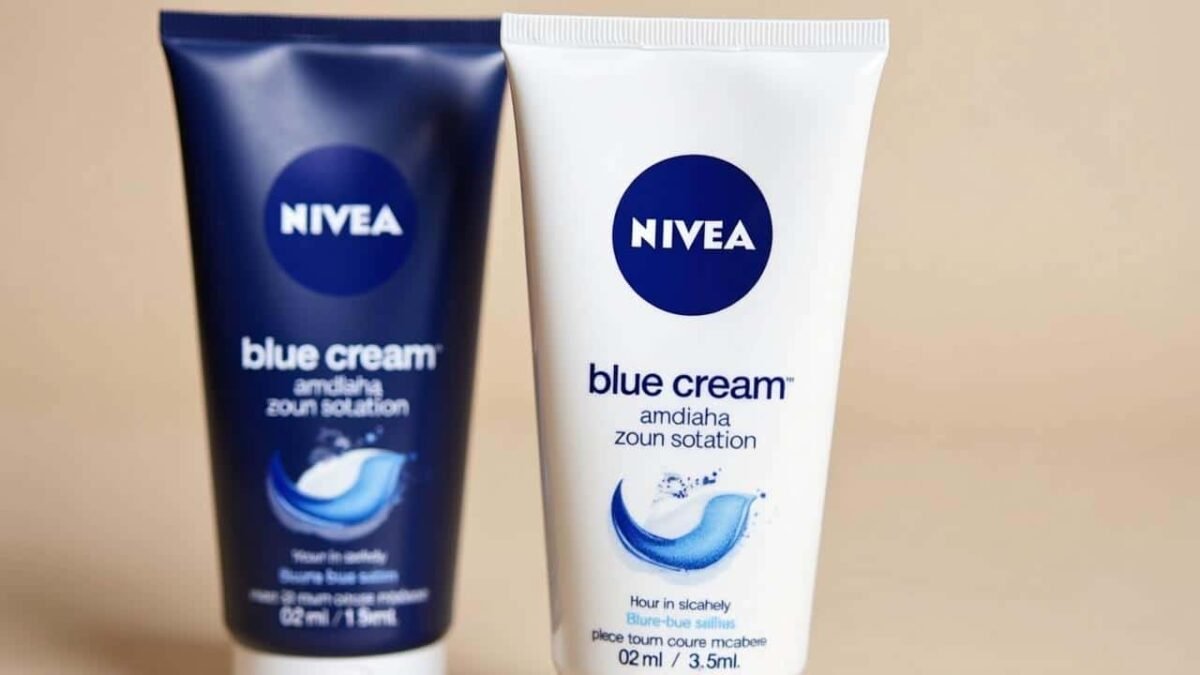
The iconic blue metal tin lands on my desk with a soft clink. My patient looks at me, half-defiant, half-hopeful: “I grew up with this. My grandmother swore by it. Is it really that bad, doctor?” The smell that escapes when I open it is almost a time machine: clean, soapy, slightly floral. Three nurses walking past turn their heads. “Oh wow, that’s Nivea, right?” one of them says, without even seeing the label.
I’m a dermatologist. I spend my days unpicking formulas, reading studies, trying to make sense of marketing versus reality. So I did what I do best: I sat down, pulled out the full ingredient list of Nivea Creme, and dissected it line by line. Some things reassured me. Some really didn’t. And one detail, hidden in plain sight, completely changed the way I look at this cult blue cream.
Nivea’s blue cream: what’s really inside this “simple” classic?
On the surface, Nivea Creme looks almost naive. Thick, white, slightly shiny, a smell that screams “bathroom cupboard in the 90s”. It’s sold as a family cream, good for face, hands, body, winter cheeks, elbows, everything. But when I look at it as a dermatologist, I don’t see “simple”. I see an old-school, ultra-occlusive formula built around mineral oil, petrolatum and paraffin.
The base is what we call an oil-in-water emulsion. The key players: mineral oil, petrolatum, microcrystalline wax, glycerin, and a mix of surfactants like lanolin alcohol and sodium cetearyl sulfate to hold water and oil together. This is classic, robust chemistry from another era. Not necessarily bad. Just… heavy, insulating, unapologetically greasy. The promise is clear: lock in moisture, protect the skin barrier, keep water from evaporating. The question is: for whom does that actually help, and for whom does it backfire?
I went back through decades of data on occlusives and barrier creams. For very dry, compromised, or wind-burned skin, petrolatum-based products can reduce transepidermal water loss by up to 98%. That’s huge. So yes, this kind of formula can soothe cracked hands, chapped lips, rough heels, winter cheeks. It’s a bit like wrapping skin in a plastic raincoat: not fashionable, not airy, but undeniably protective.
On the flip side, that same “raincoat” effect can be suffocating for acne-prone or very oily skin. Occlusion over clogged pores is rarely a love story. In my clinic, I’ve seen blue-tin devotees on the verge of tears because their breakouts exploded after using it as an all-over night cream.
How to use Nivea blue cream like a dermatologist (instead of like an advert)
Used strategically, Nivea Creme can be a clever tool. Used blindly, it can be a disaster. My first rule: treat it as a spot treatment, not a lifestyle. It works best on small, very dry, or rough areas. Think elbows, knees, ankles, cuticles, nostrils irritated by tissue blowing, cheeks in the middle of a freezing wind.
Second rule: layer it, don’t smear it on bare, dirty skin. Ideally, you apply a light hydrating serum or lotion first – something with glycerin or hyaluronic acid – then seal it with a tiny amount of Nivea on top, only where you need it. For a “slugging-lite” approach in winter, I tell my patients with sensitive, dry skin to use it just on the most fragile areas: around the nose, on dry patches, not entire-face every single night.
Where things go wrong is when people use the blue tin as a universal cure-all. They remove makeup with wipes (or not at all), slap a thick layer of Nivea on their whole face, and wonder why blackheads appear, pores clog, rosacea flares. On acne-prone, oily, or mixed skin, heavy occlusion can trap sweat, sebum, and bacteria. That’s not “purging”, that’s irritation and congestion.
*“Nivea Creme isn’t a villain,”* I found myself telling a young woman who arrived with breakouts and a metal tin in her bag. “It’s just a product from another time, that needs modern rules.” The fragrance is another hidden trap. It smells comforting, but for reactive or eczema-prone skin, perfume is a frequent irritant. Same with lanolin alcohol: some people tolerate it perfectly, others react dramatically. When patients look exhausted and guilty, I remind them they’re not doing anything “wrong”. They’re just using a family product as a miracle serum, which it was never designed to be.
Using a heavy occlusive product requires knowing your skin type. For those with a compromised skin barrier due to over-exfoliation or harsh weather, an occlusive layer can be the bridge to healing. However, for daily maintenance, lighter non-comedogenic options are often preferred by dermatologists. The key is understanding the function of petrolatum: it creates a physical barrier. It does not add water; it prevents loss. Therefore, application on damp skin is crucial to lock that hydration in.
Understanding the Ingredient List
When you pick up that blue tin, the first ingredients you see are the heavy hitters. Mineral Oil and Petrolatum are the primary occlusives. They are refined petroleum products, which sounds scary to some, but in skincare, they are incredibly stable, non-allergenic, and effective barriers. They are considered safe for use by regulatory bodies worldwide.
Next comes Glycerin. This is a humectant, meaning it draws water into the skin. However, in the Nivea formula, it is relatively low down the list compared to the oils and waxes. This suggests the primary mechanism is occlusion rather than deep hydration. It works best if you apply it over wet skin to trap that moisture.
Then we have Lanolin Alcohol. This is derived from sheep’s wool and acts as an emulsifier and emollient. It’s fantastic for extremely dry skin but is a known allergen for some. If you have a wool allergy or sensitive skin, this specific ingredient can cause redness and itching. Microcrystalline Wax gives the cream its thick, body-rich texture, helping it stay in that solid form within the tin until you warm it up.
Finally, there is the Fragrance (Parfum). In the world of dermatology, fragrance is the number one cause of allergic contact dermatitis. While many people tolerate it, those with sensitive skin, eczema, or rosacea often find their skin stings or flares after using scented products. The nostalgic scent of Nivea is a signature, but it is also a potential irritant.
The verdict: my honest take on the blue tin, after really digging into it
Here’s where I land, after years of practice and a deep dive into the formula. Nivea Creme is not a modern, elegant moisturizer. It doesn’t pretend to be. It’s a heavy, occlusive, almost old-fashioned barrier cream that still has its place in a world of 12-step routines and viral serums. On cracked heels, winter hands, rough elbows, it can be almost miraculous in a very unsexy way.
On a reactive face, acne-prone chest or back, or in a hot, humid climate, it’s far from ideal. You can absolutely find lighter, fragrance-free options that do a better job without the risk of congestion. And yet, I understand why the blue tin keeps surviving trends. It’s cheap, accessible, and wrapped in nostalgia. On a bad day, when your skin barrier is screaming, something thick and basic can feel safer than a serum with 10 actives you can’t pronounce.
We’ve all had that moment when you raid someone else’s bathroom and grab “whatever is there” because your skin hurts and you’re tired of thinking. That’s the emotional space Nivea occupies. It smells like childhood bathrooms and shared family holidays. It travels easily, it sits in drawers for years and still works. My honest take? It’s neither a miracle nor a threat. It’s a tool. Used locally, with a bit of common sense and modern knowledge, it can absolutely earn its small place in a 2026 skincare routine – not as the star of the show, but as the reliable understudy you call in when the weather, the heating, or life in general has been a little too harsh.
- Use Nivea Creme mainly on body, not as a daily all-over face cream.
- Patch test if you have sensitive, rosacea, or eczema-prone skin.
- Apply over clean, slightly damp skin or on top of a lighter hydrator.
- Keep it away from active breakouts or very oily areas.
- Think of it as a protective shield, not a complete skincare routine.
Is Nivea blue cream safe to use on my face every day?
Can Nivea Creme cause acne or clogged pores?
Is Nivea blue cream good for anti-ageing?
Can I use Nivea Creme around my eyes?
Is Nivea blue tin suitable for sensitive or eczema-prone skin?