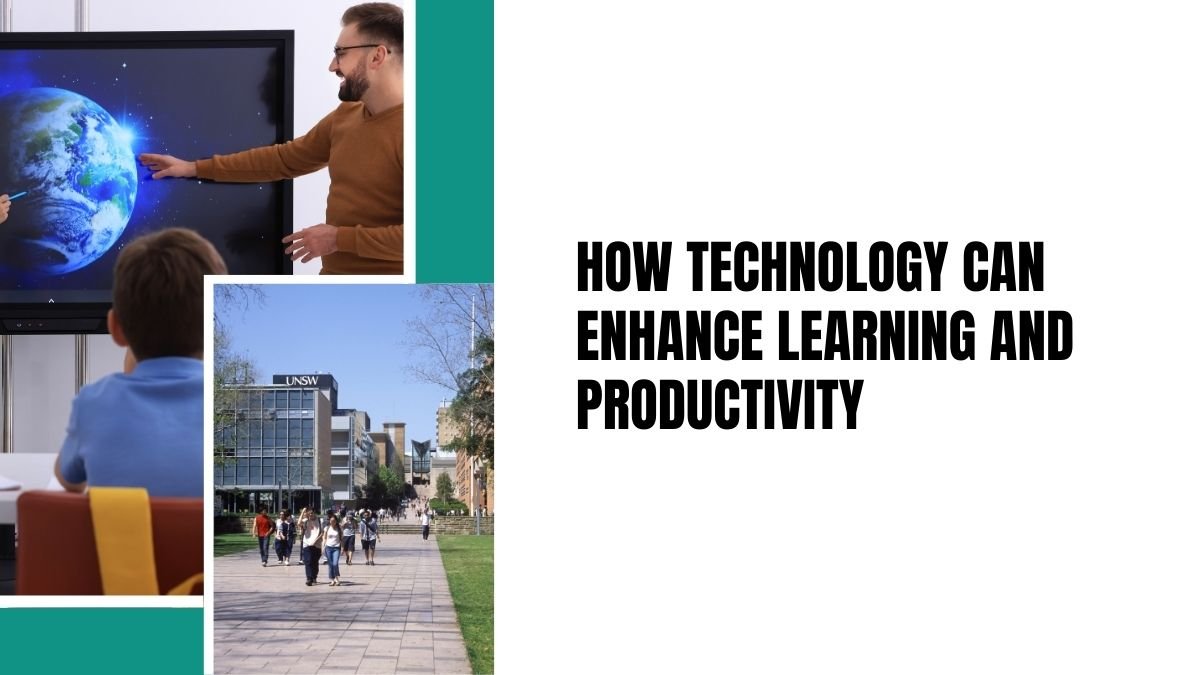
How Modern Technology Impacts Learning and Productivity
Technology has revolutionized the way we learn and work, making education and professional tasks more effective, seamless, and productive. Its impact can be observed in two main areas:
- Improving education and learning
- Increasing work productivity
1. Contribution of Technology in Education and Learning
1.1 Personalized Learning Experience
Technology allows learners to progress at their own pace and in their preferred style. AI and machine learning tools can identify weaknesses and provide targeted practice.
Example: A student struggling with a complex math topic can use platforms like Khan Academy or BYJU’s for personalized learning.
1.2 Resource Accessibility
Students gain easy access to e-books, online videos, interactive simulations, and MOOCs beyond the traditional classroom or library.
Example: Watching a science experiment online can save time and resources compared to performing it in a physical lab.
1.3 Engagement and Interactivity
Virtual classrooms, game-based learning, and simulations make learning more engaging and easier to understand.
1.4 Collaboration
Tools like Google Docs, Microsoft Teams, and Zoom enable real-time collaboration and feedback, teaching teamwork and communication.
1.5 Flexibility
Virtual learning allows students to study anywhere and anytime, helping those with busy schedules or part-time jobs.
1.6 Development of 21st-Century Skills
Digital learning helps students develop technical skills, data analysis, and digital presentation skills relevant to future job markets.
2. Contribution of Technology to Work and Productivity
2.1 Automation
Technology automates routine tasks like data entry or invoice processing, freeing up time for more creative and important work.
Example: Data processing using Excel formulas or Python scripts.
2.2 Efficient Communication & Collaboration
Video conferencing, instant messaging, and project management software enable seamless team communication and collaboration, reducing misunderstandings and speeding up decision-making.
2.3 Data Analysis & Decision Making
Business intelligence software and machine learning algorithms help make accurate, data-driven decisions.
Example: Marketing teams can analyze customer data to create tailored strategies.
2.4 Flexibility & Telecommuting
Remote working is possible, increasing productivity and improving work-life balance.
2.5 Streamlining Processes
Digital tools make administrative tasks faster, reduce errors, and make information readily available.
2.6 Customization
Students and employees can tailor digital tools and apps to suit their personal work or study preferences.
Example: Selecting specific apps for project management or personal productivity.
Conclusion
Modern technology has transformed learning and work. In education, it personalizes learning, increases interactivity, enables collaboration, and provides flexibility. In professional work, it boosts productivity through automation, enhances decision-making, and streamlines communication. Both students and professionals can leverage technology to achieve success and efficiency in today’s digital world.